Want to be in the loop?
subscribe to
our notification
Business News
FOREIGNERS STILL HESITANT ABOUT LEASING LAND IN VIETNAM
One of the more common approaches is to use a parent-subsidiary business formation to hold the lease to the land.
Under this approach, a foreigner who holds an interest in a legally formed joint stock company (JSC) established pursuant to Vietnamese law and authorized to operate a business for one of the purposes previously described acquires a tenancy in land by first having the JSC establish a wholly owned subsidiary.
The land is then acquired by the wholly owned subsidiary from a private party in Vietnam and subsequently in a transfer leaseback transaction— the property is transferred to the government and leased back by the subsidiary.
This latter lease back is necessary because in Vietnam only the Government has the right of land ownership and only it can grant the right to a foreigner to use the land, which is referred to legally as the Land Use Right (LUR).
Therefore, land itself in Vietnam cannot be bought. In practice, this means that the Government leases LURs to eligible individuals and organizations for a set period of time and purpose. These rights are evidenced by a LUR Certificate (LURC).
The registration for the LURC is compulsory for the land users. Thus a foreign investor who requires land for a factory, warehouse etc. must lease the LURs for the site to be used from the Government.
Foreigners who are not licensed to operate in Vietnam cannot obtain such a lease. When the lease expires, the right to use the land, and any infrastructure connected on the land, reverts to the Government with no compensation.
A foreign investor can only be leased land directly from the Government. A foreign investor cannot legally sub-lease land from a private individual, enterprise or other entity.
A similar result can be achieved using a joint venture form of organization.
The LURs detailed above are only valid for a restricted period of time, in general 50 years. In exceptional cases the Prime Minister can extend the duration to a maximum of 70 years.
Such an extension is usually granted (but not guaranteed) if upon expiry the investor wishes to continue to use the land and they have complied with the land regulations during the period and the land use was consistent with the approved land plan.
Most experts agree that Vietnam’s relaxing of land lease laws has been a very helpful move for the economy but believe much more should be done to overcome the hesitancy of foreigners— as many parts of the law remain unclear.
Source: VIR
Related News

INFRASTRUCTURE / CONSTRUCTION / LOGISTIC / PORT
VIỆT NAM-CAMBODIA TRADE GATHERS PACE TOWARDS $20 BILLION TARGET
Trade between Việt Nam and Cambodia continues to grow, remaining a bright spot and a key pillar of bilateral cooperation as the two countries aim to raise two-way trade to US$20 billion in the coming years. After setting a record of more than $11.3 billion last year, bilateral trade reached about $8.7 billion in the first eight months of this year, up 8.3 per cent year on year.
TECHNOLOGY
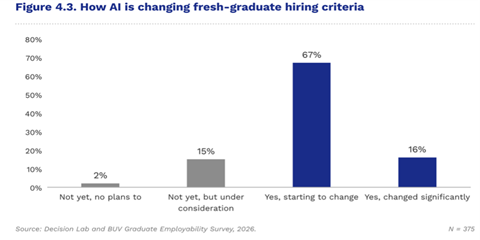
AI BEGINNING TO RESHAPE RECRUITMENT CRITERIA
Digital literacy is the only capability area in which fresh graduates meet employers’ expectations, according to a new report. Yet, it is also the standard rising fastest, as businesses increasingly expect new hires to use AI effectively in the workplace. Some 83 per cent of employers say AI has changed, or is beginning to change, their hiring criteria, while 94 per cent report higher expectations for digital and AI capabilities than they had two to three years ago.

INFRASTRUCTURE / CONSTRUCTION / LOGISTIC / PORT
ĐÀ NẴNG GREEN-LIGHTS US$105 MILLION THAI DEVELOPMENT DEAL
The central city has approved an investment proposal by Thailand’s WHA Group to develop infrastructure for the 400ha WHA Đà Nẵng Industrial Park project on two communes of Thăng Bình and Đồng Dương, with an investment of more than VNĐ2.7 trillion (US$105 million). The city said it approved WHA Industrial Development International's status as an investor in the project, which is expected to take place between 2027 and 2034.

VIETNAM ECONOMY INVESTMENT
MOBILE PHONE EXPORTS RISE 20% TO $51.8 BILLION IN FIRST NINE MONTHS
Exports of mobile phones and components rose 20 per cent year-on-year to nearly US$51.8 billion in the first nine months of 2026, with China, the US and Republic of Korea accounting for more than half of the total. Shipments to the three markets reached a combined $26.18 billion, or 50.6 per cent of total exports of the product group during the period, according to data from the Vietnam Department of Customs under the Ministry of Finance.

VIETNAM ECONOMY INVESTMENT
FRUIT AND VEGETABLE EXPORTS POISED TO HIT $10 BILLION IN 2026
Fruit and vegetable exports are on track to reach nearly US$10 billion in 2026, after rising 19.9 per cent year on year to nearly US$7.4 billion in the first nine months, driven by strong seasonal demand and abundant tropical fruit supplies. The Ministry of Agriculture and Environment said the growth reflected stronger international demand for fresh produce and processed agricultural products.
GARMENT / TEXTILE
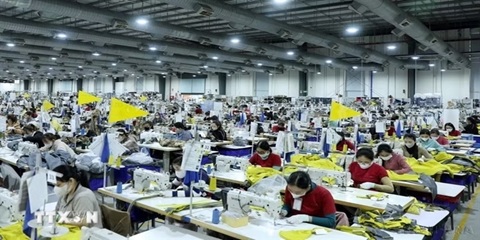
TEXTILE EXPORTS FACE DUAL CHALLENGES OF SUSTAINING ORDERS AND BOOSTING EFFICIENCY AMID GROWING COMPETITION
Data shows that the textile and garment sector maintained its growth momentum in the first nine months of this year. The industry's total export turnover reached an estimated US$35.721 billion in the first nine months of this year, up 3.3 per cent year-on-year. Despite posting encouraging export figures, Vietnamese textile and garment enterprises continue to navigate unpredictable market variables.
Events Sponsors






















